Showing posts with label Michigan. Show all posts

Wednesday, July 28, 2021

Mackinaw Design Boat

© Copyright 2017-2021 Michigan Diver LLC or their respective credited artist. 
 All rights reserved.


Mackinaw Design Boat


An example of a typical Mackinaw design boat. (Photo Credit: Robert McGreevy)

Michigan Divers, LLC announces the discovery of a previously unknown shipwreck, near the Grindstone City Harbor.  Captain Cindy Lynch, her husband Captain Mike Lynch and Kevin Jimkoski were scuba diving from shore and discovered the wreck site.  It was initially believed that the wreckage was from the Tug Margaretta, which exploded outside of the Grindstone Harbor in 1907.  On a recent dive, Cindy, Chris Roth, and Kevin further explored the site and it was determined that the wreckage was not from a tugboat but from a small, single-masted sailing vessel.  After consulting with local historian and marine artist, Robert McGreevy, it was determined that the wreckage was likely from a “Mackinaw Boat,” which was common for the area, around the end of the 19th century.  The small sailing vessel was of “double-end design” and had at least one mast, a drop centerboard, and a tiller.  The wreck site lies within the boundaries of the Thumb Bottom Land Preserve and can be found in 8 ft of water, approximately 150’ due east of the end of Grindstone City short point.  People exploring the site can expect to find many small artifacts and several different fish species.  This site should be an excellent local attraction for beginning divers, snorkelers, and kayakers.

The Typical Mackinaw Boat Design in the 19th Century Great Lakes

Introduction

The Mackinaw boat, often referred to as the “pickup truck” of the 19th century, played a pivotal role in the maritime history of the Great Lakes. These versatile vessels were essential for explorers, traders, fishermen, and coastal residents, providing a reliable means of transportation and cargo hauling across the upper Great Lakes region.


Design and Construction

Mackinaw boats were known for their distinctive design, which combined elements from various maritime traditions. They typically featured a double-ended hull, round bilges, and a centerboard, making them highly maneuverable and seaworthy. The hulls were either carvel or lapstrake built, with the latter being more common. The boats were partially decked, providing some protection from the elements while maintaining an open workspace for fishing and cargo handling.


The construction materials for Mackinaw boats varied, but they were often built using locally sourced timber such as red or white oak. The boats ranged in length from 16 to 40 feet, with the larger models capable of carrying substantial loads. The design also included a plum stem, down-sprung bowsprit, and a raked sternpost, which contributed to their stability and performance in rough waters.


Rigging and Sails

Mackinaw boats were typically rigged with large sails, allowing them to take full advantage of the wind. The most common rigging was the gaff-rigged cat-ketch, which provided excellent balance and control. This rigging setup made the Mackinaw boat an efficient and fast vessel, capable of navigating the challenging conditions of the Great Lakes.


Usage and Significance

The versatility and reliability of Mackinaw boats made them indispensable for various maritime activities. They were widely used for commercial fishing, cargo transport, and passenger ferrying. Their ability to handle rough waters and beach safely in emergencies made them a preferred choice for many Great Lakes mariners.


Mackinaw boats were particularly significant in the commercial fishing industry, where they were used extensively throughout the 19th century. Their design allowed fishermen to venture offshore and work in isolation, knowing they had a dependable vessel to rely on.


Legacy

The legacy of the Mackinaw boat endures in the Great Lakes region, where they are celebrated for their historical importance and unique design. Many original Mackinaw boats have been preserved in museums, and modern replicas are often used for educational purposes and recreational sailing.


In conclusion, the Mackinaw boat’s design and functionality made it a cornerstone of 19th-century maritime life in the Great Lakes. Its enduring legacy is a testament to the ingenuity and craftsmanship of the boatbuilders who created these remarkable vessels.
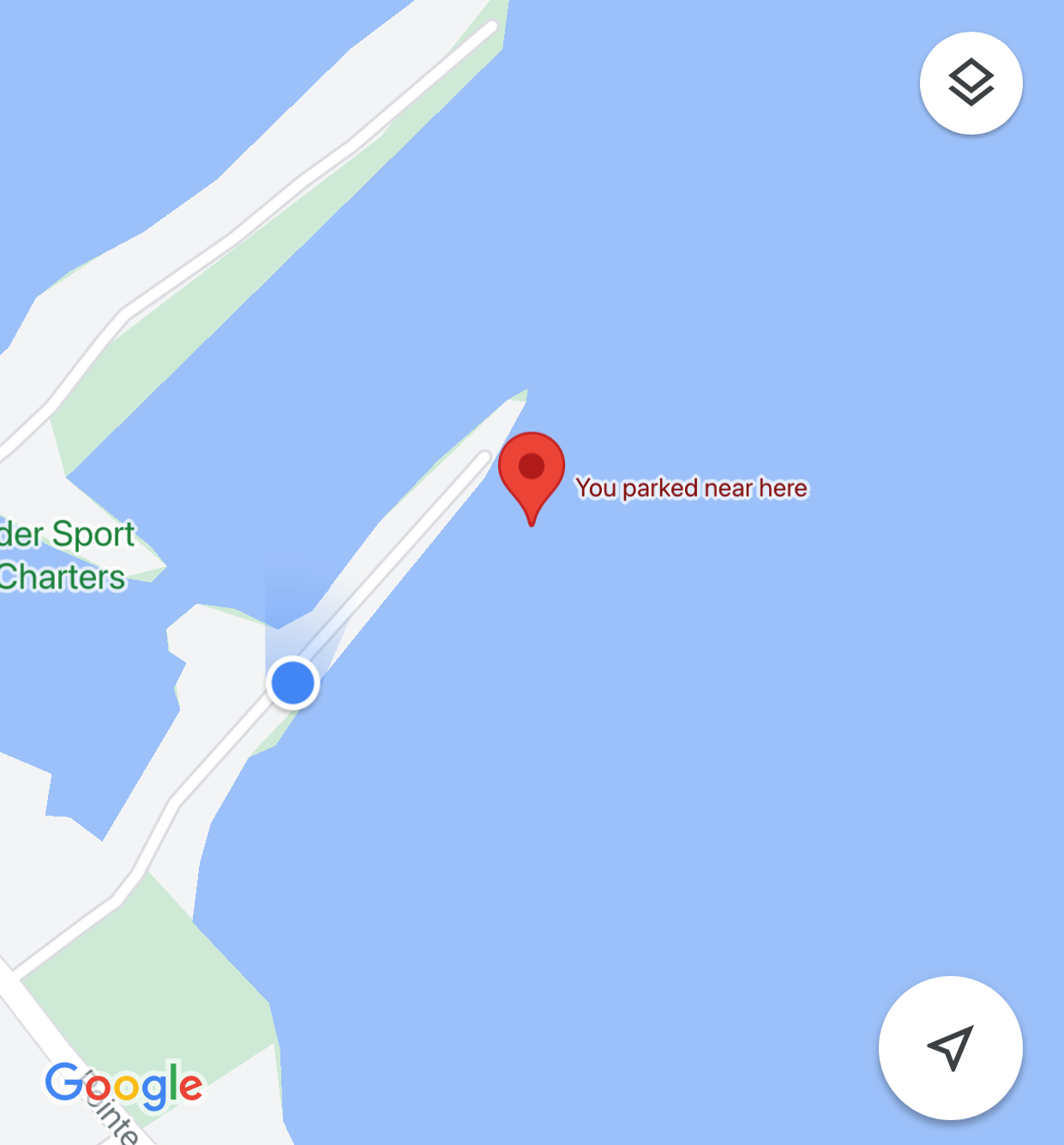
Location of the Mackinaw design wreck site.  Located just east (about 200-250ft) off the end of the short point at the Grindstone City marina.


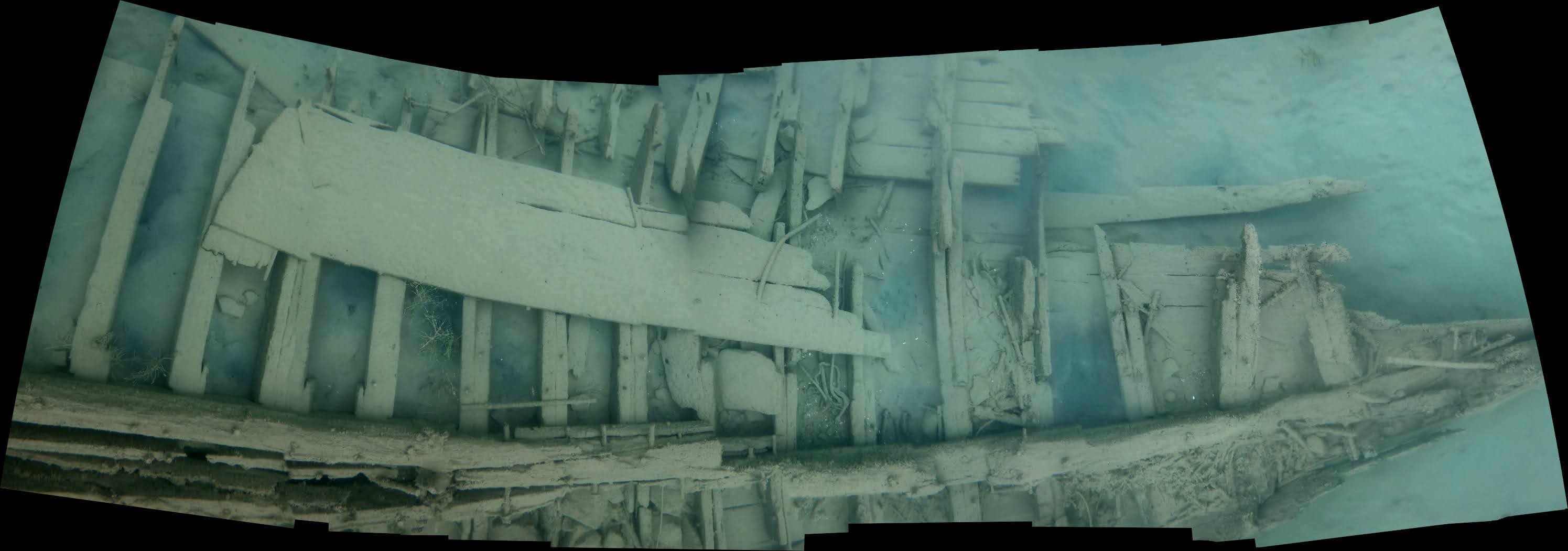
Photogrammetry model of the wreck site.

Divers Cindy Lynch and Kevin Jimkoski pose at the bow of the wreck site.

Remains of the bow.  Notice the metal skeg on the keel.

Another view of the bow remains.

Remains of the stern.

Photomosaic of the keel showing the location of the drop centerboard.

The drop centerboard sits on the ribs at the port side near the bow.


Thursday, July 15, 2021

Jacob Bertschy

© Copyright 2017-2021 Michigan Diver LLC or their respective credited artist. 
 All rights reserved.

JACOB BERTSCHY - 10 Feet Deep.  The Jacob Bertschy was lost in a storm on September 3rd, 1879. It grounded with 51 crew and passengers (everyone was saved) and a cargo of shingles and wheat. The Bertschy was a wooden steamer built in 1867 in Sheboygan, WI, and was 138 feet long.

Drawing of the Jacob Bertschy by Artist Robert McGreevy (www.McGreevy.com)


Today the Bertschy sits in only 6-8 feet of water and is a possible shore dive (very long swim) out of Grindstone City Harbor or is reachable by boat for snorkeling or scuba diving.

News articles regarding the loss of the Jacob Bertschy

June 2021
There seems to be very little available or published in terms of a photo of the Jacob Bertschy or images of the wreckage.  Capt'n Cindy decided it was time to change at least the lack of underwater images of the Jacob Bertschy wreck site.  Initially, the wreck site of the Jacob Bertschy was listed as a shore dive from the Grindstone Marina.  As we investigated the location of the wreck site, it was determined that it would be a long swim from shore to the reported location.  Cindy rightfully opted to perform the search with her DiveX Pirahna DPV (Dive Propulsion Vehicle) or commonly called dive scooter. 

Capt'n Cindy with her DiveX Pirahna DPV

Scootering out toward the believed wreck location, Cindy was able to find scattered remains of the vessel indicating she was headed in the right direction.

'
Scattered pieces of wreckage from the Jacob Bertschy

Continuing the search, additional pieces were found.

Additional wreckage scattered on the lake floor of the Jacob Bertschy

Finally, after additional searching of the area with the DVP, Cindy found the largest piece of the Jacob Bertschy wreckage, the keel.  A photogrammetry model was created from the footage gathered to better understand how the wrecksite looks today.

Photogrammetry model of the wreck site of the Jacob Bertschy as it lies on the bottom of Lake Huron.

After many years on the bottom of Lake Huron, the wind, waves, and have broken up the wreck and scattered the debris across a large bottomland area.  Much of the keel is now buried in the rock and gravel and the wreckage sits embedded and even with the bottom contours.


The Jacob Bertschy wreck site lies within the Thumb Area Bottomland PreserveAs mentioned previously this is probably a site best enjoyed from a boat.  The swim from shore is rather long!

Thursday, October 29, 2020

Glenorchy

© Copyright 2017-2020 Michigan Diver LLC or their respective credited artist. 
 All rights reserved.


GLENORCHY - (N43.48.580 W.082.32.721) 100 to 120 Feet Deep.  The Glenorchy is a steel freighter that collided with another ship on October 29th, 1924.  The Glenorchy is 365 feet long and sits "turtle" (upside down) in 120ft of water.  For the properly trained and experienced diver there are penetration opportunities on this wreck.

October 29th, 1924 the steel freighter Glenorchy collided with the Leonard B. Miller in heavy fog on Lake Huron about 6 miles off of of Harbor Beach Michigan. After the impact the Miller came alongside the Glenorchy to take on the crew of the sinking ship. One story from the sinking is that one of the crew members was trapped in his stateroom after the collision. Captain Burke of the Glenorchy realized this as the crew was being transfered to the Miller. Captain Burke then when to the stateroom and used an axe to chop his way into the stateroom and rescue the trapped crewman. Moments after Captain Burke and the crewmen stepped on the deck of the Miller, the Glenorchy turned to its port side, then rolled over and sand to the bottom.

After taking on all 20 crew members, the Miller returned to Port Huron with a badly damaged bow and a large hole in its port side. It was reported that the pumps were barely able to keep up with the incoming water from the damage.


Chris Roth inspecting the prop on the shipwreck Glenorchy


The Glenorchy lies upside down on the lake floor.

Debris lies around the shipwreck Glenorchy.


There are openings in the stern hull that lead to a mangled engine room.  Divers need to take care (and properly trained) if penetrating as there are many entanglement hazards inside the wreck.


The propeller is always an amazing site.  The size of the prop is impressive when compared to the diver next to it (Chris Roth)


Friday, April 12, 2019

Diving the Whaleback Clifton in Lake Huron

Shipwreck: Whaleback S.S. Clifton

By: Michael Lynch

The History

The S.S. Clifton was originally built and christened as the Samuel Mather.  The whaleback was built at the American Steel Barge Company in West Superior, Wisconsin in 1892.  She was 308 feet long, had 30 foot beam, and had a 24 foot depth with a 3,500 ton capacity. 

For 31 years the vessel worked the great lakes carrying iron ore.  From 1923 to 1924 the vessel was refitted in Sturgeon Bay, Wisconsin with a topside self-unloading boom to handle the change in cargo from iron ore to stone aggregate .  Inside the cargo holds, a Smith-patented tunnel scraper system was installed and allowed the ship to quickly unload and allowed the vessel to offload at ports previously unable to be serviced by the ship.

The tragic story of the S.S. Clifton started out on September 21, 1924 in Sturgeon Bay.  This was right after the Clifton had completed the upfit of the unloading boom to the deck of the whaleback for service as a stone aggregate carrier.  From there the Clifton took on a load of stone aggregate that was scheduled to be delivered to Detroit.  By 10:20am the Clifton was seen passing through the Straits of Mackinaw.  There was even a report that a tug on Lake Huron saw the freighter downbound that evening in Lake Huron.  Unfortunately, that evening a gale hit the Clifton while on Lake Huron.  It is believed that sometime during that storm the Clifton quickly foundered with the lost of Captain Emmett Gallagher all 27 other souls on board.  Speculation was that the upfit of the self unloading boom contributed to the loss of the vessel due to instability. 


Drawing by Robert McGreevy (www.McGreevy.com) of the Clifton in that fatal Gale in 1924
When the Clifton did not arrive in Detroit three days later a search was started.  The searchers looked along the coast of Lake Huron and couldn't find a trace of the Clifton.  It wasn't until days later that wreckage started to wash ashore on the Canadian side.  This was the first indications of where the Clifton foundered.  The Clifton and what really happened would remain a mystery for another 92 years! 

Newspaper Article from Wisconsin Journal, September 26, 1924

The Discovery

It wasn't until Dave Trotter and the Underwater Research Associates announced the discovery of the Clifton in September 2017 that more details about the mystery could be gathered. Within his announcement they state that the wreck was found in June of 2016 with the first dives by the URA team on September 24, 2016.  From that dive they were able to confirmed the target was the S.S. Clifton.  From that point, the teas was able to complete 9 more dives on the Clifton through the following 2017 dive season before announcing the find and the first pictures of the Clifton laying on the Lake Huron bottom.  As normal practice for the team, the location of the wreck was held in private with the team.

Drawing by Robert McGreevy (www.McGreevy.com) from information by the URA team on what the Clifton looks like on the bottom of Lake Huron.

In 2017, before the announcement by the Trotter team, there were rumors within the local diving community that the Clifton had been found.  We also spent days in 2017 investigating and scanning leads for areas that we thought the Clifton might be.  Unfortunately the 2017 season did not provide any substantial targets for us.  So we continued more research and chart investigations over the winter to setup plans for searching in 2018.

Our Story

In May 2018 the shipwreck diving season started for us on the Great Lakes.  Diving this time of year is very cold and any technical dives this time of year are normally kept pretty short.  We were fortunate that this early season gave us a very flat day, albeit very cold, and we decided to follow up on some potential target information that we had been pursuing at the end of the 2017 and researching over the winter.

Beautiful day out on Lake Huron to be searching for shipwrecks.


After about 4 hours of sidescan work, we ran across a hit.  Running the boat over the target it was very clear that we found what we were hoping to find.  We believed it to be the Whaleback S.S. Clifton!


Calm waters on Lake Huron make for great conditions for side scan imaging

Our first view of the S.S. Clifton as it appears on the side scan image

Did I mention it was still really cold out!  Cindy and I were the only ones on the boat that day searching the lake.  In fact, I don't remember seeing another boat except for a few passing freighters.  We had a good discussion about diving the target.  Only having two people on the boat makes for a more challenging time mooring into the wreck as it would require one to dive and tie into the wreck and the second person, single handed, managing the running of the boat.  While this is not impossible, adding in the variables of the cold temperatures and the long distance from shore for help or emergency aid, we made the prudent decision that we would need to come back later in the season to make our dives.  We saved the coordinates and dreamed of warmer times when we would get back and make a dive on the site to confirm what we had found.

Cindy warming up between rounds at the helm sidescan searching Lake Huron's bottom
Mike at the helm trying to stay warm while searching the Lake Huron bottomland

One of the good and bad things about the Clifton is that its wreck location is a ways out in Lake Huron.  This means that not many people will be stumbling across it and diving this location requires an almost perfect day due to the time it takes to make the run out to the location.  So, it took us a while before we could get a good opportunity to get back out to the site.

The Dive

Later in the season (with somewhat warmer water temperatures) we had the opportunity to make that dive.  This time we had our dive buddy Chris Roth along to add a 3rd set of hands for setting up the mooring into the shipwreck.

Upon descending to the shipwreck, it was undeniable that this was the Clifton.  The whaleback ships are so distinctive!  This is an amazing dive.  Many artifacts are all over the shipwreck.  Here are a few images from our dive on the Clifton.

The stern of the whaleback Clifton.  Its such a unique design.  The Clifton is laying on its port side.

Chris swimming toward the bow of the Clifton

Chris taking video of items laying on the bottom of Lake Huron.

Chris stops to look at the beautiful ships wheel on the Clifton.  The upper section of the stern cabin is missing.

This gives you some perspective on the size of the stern cabin with Chris visible just to the left.

Much of the bow is destroyed on the Clifton when it impacted the lake bottom.  This is the remains of the forward structure that was on the bow of the Clifton.

Another view looking toward the stern of the bow section of the Clifton.  You can easily see the massive amount of damage as the ship struck the bottom of Lake Huron.

More mangled debris from the bow of the Clifton.

Penetrating into the engine room of the Clifton.

White paint, gauges, and controls all visible within the engine room of the Clifton.  Being inside the wreck this area is protected from the Zebro/Quagga mussels that invade a shipwreck on the outside.

Another image showing the white painted woodwork inside the Clifton.

A guage panel inside the engine room.  Notice the intact light bulb and glass enclosure in the background.

Looking within the very stern of the Clifton.  On the right of the image is the white painted wood ceiling with the light bulb still intact after all these years.

Looking down the deck of the Clifton.  Much of its stone cargo has spilled out onto the lake floor.  The mooring winch is visible on the middle of the deck.

The A-Frame of the unloading boom.  This boom was just added in Sturgeon Bay prior to its fateful journey that ending in a Lake Huron storm.

Another view of the deck of the Clifton and its load of stone spilled out onto the lake floor.

Items from the Clifton that were most likely placed by the original discovery team.

More artifacts from the Clifton.

A fire extinguisher from the Clifton.  This sits just outside the openings to the stern structure.  Most likely this was placed here by the original discovery team.

An image of the unloading boom that was added prior to the Clifton's last sail.  Many believed the loss of the Clifton was due to instability from the addition of this boom.  However, after now finding the Clifton, the boom is still in position and does not appear to be the cause of her sinking.

The A-Frame for the unloader boom on the Clifton.

The bow structure completely torn free from the bow itself.

Looking down the remains of the stern cabin structure.

Dive Team
Cindy Lynch
Chris Roth
Michael Lynch